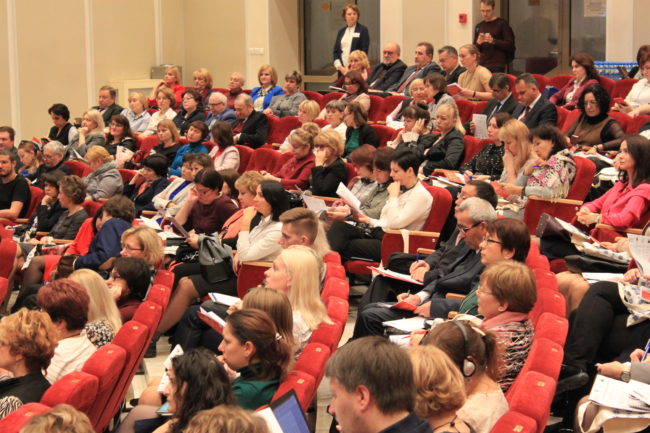



From November 24 to 26, 2024, the Annual International Conference of the Center for International Cooperation in Education Development (CICED) was held in Yerevan, Armenia, under the theme “SAM Methodology: Advancing Educational Practices, Improving Pedagogical Approaches, and Developing Promising Diagnostic Tools.”

The conference brought together over 50 experts from Russia, Armenia, Belarus, Kyrgyzstan, and Tajikistan, representing educational institutions, national centers for assessing education quality, ministries of education, and other specialized organizations.  The conference topics covered a wide range of issues related to the application of the SAM methodology for assessing subject competencies, diagnosing pedagogical practices, and…


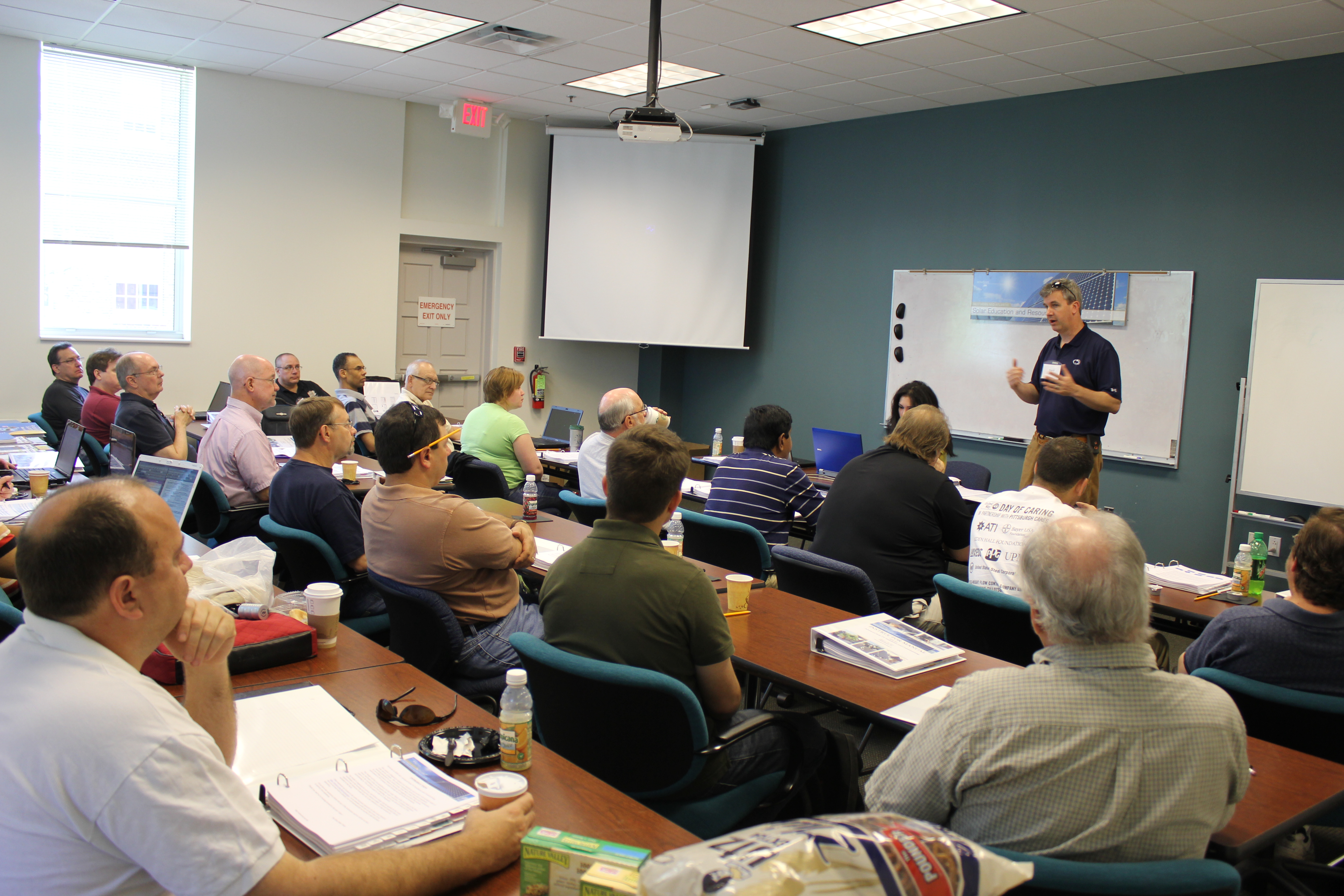
In November, in the city of Minsk, Republic of Belarus, in-person seminars on the professional development program for teachers based on the SAM (Student Achievement Monitoring) diagnostic tool were successfully conducted

The events were held in collaboration with experts from the Research Center of the Academy of Education, ensuring a high level of preparation and delivery. More than 30 primary school teachers from educational institutions across the republic participated in the seminars. The professional development program for teachers, designed using the SAM diagnostic tool, is a…

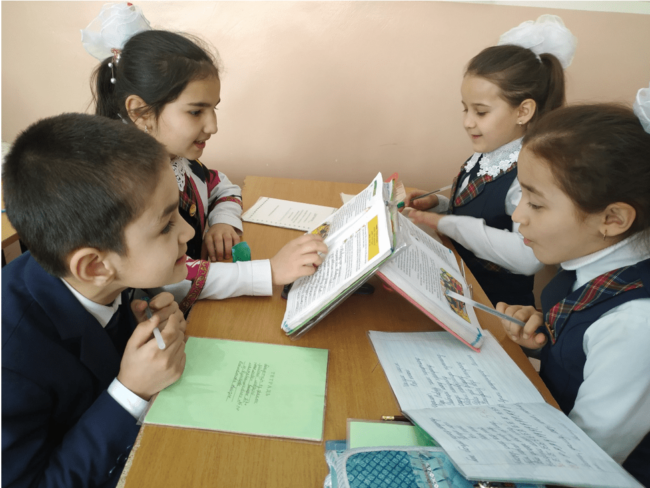
Development and Localization of the Express Version of the Diagnostic Tool for Primary School Teachers’ Pedagogical Practices in Central Asian Countries

The project for monitoring pedagogical practices in schools of CIS countries was developed as part of the international Russia Education Aid for Development Program (READ). Its primary goal was the development, piloting, and implementation of a diagnostic tool for evaluating pedagogical practices, as well as the creation of professional development programs for primary school teachers.…

Project on Implementing Educational Modules to Improve Academic Performance and Address Learning Gaps Among Schoolchildren

The project on implementing educational modules to enhance academic achievements and eliminate learning gaps among students was developed as part of the Russia Education Aid for Development Program (READ). The primary goal was to create and pilot educational and methodological complexes (EMCs) for Russian language and mathematics for secondary school students using the methodology of…

Seminars on the Teacher Professional Development Program Held in Bishkek, Kyrgyz Republic

In-person seminars on the teacher professional development program based on the use of the SAM (Student Achievement Monitoring) diagnostic tool were successfully conducted in November in Bishkek, Kyrgyz Republic. The three-day course brought together 40 mathematics and Russian language teachers from various regions of the country. The event was organized in collaboration with the Department…

International Comparative Monitoring: Modern Student Competencies and Assessment Methods Across CIS Countries

The education quality monitoring project in CIS countries was developed as a key initiative within the Russia Education Aid for Development Program (READ). Its primary goal was to assess the academic achievements of students and evaluate their core skills, including 21st-century skills such as critical thinking, creativity, collaboration, and ICT literacy. The study involved three…

Professional Development Courses for Russian Language and Mathematics Teachers Held in Dushanbe, Republic of Tajikistan

The professional development program for teachers (compensatory modules), developed with the support of the Center for International Cooperation in Education Development, aims to address educational deficits and improve the quality of teaching through specialized training modules for Russian language and mathematics. The program is based on the SAM (Student Achievement Monitoring) methodology, which assesses students’…

Professional Development Courses for Russian Language and Mathematics Teachers Held in Bishkek, Kyrgyz Republic

In October 2024, a three-day professional development training for Russian language and mathematics teachers took place in Bishkek, Kyrgyz Republic. The training was organized with the support of the Department of Education Quality Development at the Ministry of Education and Science of the Kyrgyz Republic, under the framework of the Center for International Cooperation in…

Diagnostic Tool for Evaluating Teachers’ Pedagogical Practices

Between 2008 and 2018, Russia developed a diagnostic tool called SAM (Student Achievement Monitoring) to assess students’ mastery of cultural and subject-specific methods (tools) of action. This methodology is particularly effective for identifying achievements at higher levels (Levels 2–3) of learning. However, the successful application of the SAM technology requires careful planning of content, methods,…

Monitoring Study in Schools of CIS Countries Using Russian Tools for Assessing the Quality of Education

Monitoring Study in Schools of CIS Countries Using Russian Tools for Assessing the Quality of Education One of the largest projects of the READ Program in 2021–2024 was the preparation and implementation of an intercountry monitoring study in schools of CIS countries using Russian tools for assessing the quality of education. The monitoring covered Armenia,…

Development of an Assessment Tool for 21st Century Skills

As part of the international program to improve the quality of basic education, a large-scale project for the development and piloting of assessment tools for 21st-century skills has been completed. The project aimed to enhance educational systems and strengthen the capacity of educators in Tajikistan, Kyrgyzstan, and Belarus.  The primary goal of the project was…

Russian Education Aid for Development Program (2021–2024)

In recent decades, the international community has developed long-term approaches to sustainable development. The 17 Sustainable Development Goals (SDGs), adopted by the United Nations in 2015, serve as a universal call to action to eradicate poverty, protect the planet, and ensure peace and prosperity for all. The fourth Sustainable Development Goal (SDG 4) aims to…

Russian Experts have found a “Recipe” for Quality in Online Education

Online learning has rapidly burst into our lives and forced universities to look for new answers to what quality is. Experts from Inobra analyzed the existing scientific literature on this topic and discovered that methods suitable for offline learning in a digital environment have their own specifics. “Quality in online learning, like good coffee, requires a special recipe,” says one of the authors of the study, Anna Korczak. “You can’t just transfer offline practices to online and expect the same taste.” The researchers identify specific features of the online format: a more thorough study of educational materials, enhanced psychological and information support for students. If offline, the key factor is  the “exclusivity” of the university and its…

Tools for Assessing the Level of Formation of 4K Competencies among Students

We would like to introduce you to two tools for evaluating and monitoring the development of 4 key competencies (communication, creativity, critical thinking, collaboration) – a criteria-based assessment rubric and an observation form. These tools provide efficient teacher-student feedback and are described in the book “4K Competencies: Development and Assessment in the Classroom.” Let us…

GEM Report, UNESCO. Two Spotlight country reports released

South Africa: The launch of the South Africa Spotlight report took place at the 2024 Lekgotla hosted by the Department of Basic Education on March 14. Produced in partnership with the Department of Basic Education and ADEA, the report demonstrates that foundational literacy and numeracy have been strong national priorities but that challenges remain in…

Rosobrnadzor has announced that from September 1st, only Four Events will be conducted to assess the Quality of Education

The Government of the Russian Federation has approved a list of measures for assessing the quality of education and guidelines for conducting these events.  The decree of the Government of the Russian Federation “On Approval of the List of Measures for Assessing the Quality of Education and Guidelines for Conducting       Measures to Assess the Quality of Education” was signed by Prime Minister Mikhail Mishustin.  According to the approved document, starting from September 2024, Rosobrnadzor will conduct only the following four activities as part of its monitoring of the education system to assess…

Assessment of Education Quality: Expert Advice Part 3

Develop Modern Forms of In-School Assessment Bolotov and Waldman identified the following elements of  in-school assessment, in addition to the general principle of criteria-based assessment: Learning goals and criteria for achievement are developed collaboratively; Various assessment techniques are employed, including tests, essays, and portfolios; Students evaluate one another and themselves; There is a shift from…

IAEG-SDGs. 2025 Comprehensive Review Process

In accordance with GA Resolution 71/313, the Inter-Agency and Expert Group on Sustainable Development Goal Indicators (IAEG-SDGs) will be conducting a Comprehensive Review of the global indicator framework throughout 2024 and will submit its proposed refinements, revisions, replacements, additions and deletions to the 56th session of the United Nations Statistical Commission in March 2025 for…

The Digital Divide: the Shift to Distance Learning during the Pandemic has increased Educational Inequality

It is widely believed that distance learning provides access to education for all students, regardless of whether he lives in a megalopolis or in a remote village. However, a study conducted by Alexandra Hetman and Ksenia Adamovich has shown that this is not always the case. They analyzed how 85 regions of Russia survived the pandemic, and found that the massive transition to online education has only increased educational inequality. The main problems were related to access to digital learning resources. Many families lacked the necessary devices and internet connection, and in cases where there were several children, they had to share a single computer.…

GEM Report, UNESCO. Nominate your education leader

The 2024/5 GEM Report due out in November will examine the requirements of good leadership in education and spotlight the stories of effective education leaders from around the world. With your help, we want to find: teachers or head teachers who have come into a school and made it more inclusive… politicians or civil servants…

The Higher School of Economics (HSE) and Skillbox haveannounced a Project aimed atStandardizing the Evaluation of the Quality of Online Educational Services in Russia 

The Higher School of Economics (HSE) and Skillbox, an educational platform, have begun work on the first multi-component model in Russia for assessing the quality of digital learning products. The aim of this strategic project is to establish a standard for quality in online courses for the Russian education technology (EdTech) industry. The first stage of the project, which involved studying existing practices and approaches to assessing educational products, was showcased at the Moscow International Education Salon (MMSO) in 2024. It is planned that the model will be finalized by the end of 2024. A multi-component model for assessing the quality of online courses will thoroughly evaluate the product, from…

The Development of Critical Thinking in Children and the Role of Parents and Educators in this Process

The Centre has been conducting regular research since 2020 aimed at investigating methods of developing critical thinking in children and creating tools to assess the level of this skill development. Critical thinking refers to the ability to analyze information, evaluate its credibility and relevance, ask questions, and form one’s own conclusions. It is an essential…

GEM Report events in April/May

April 30: Consultation on the 2024/5 GEM Report hosted by the German Commission for UNESCO May 2: Dialogue with International Organization of Employers policy working group on Employment, Skills and Digitalization May 7: Launch of the 2024 Spotlight Report on universal basic education completion and foundational learning in Africa: Learning Counts at the Conference of…

“This is often another PR attack.” The creator of the Unified State Exam addresses people’s dissatisfaction with the exam

In Russia, discussions about canceling the Unified State Exam occur in public with a frequency of several months. The most recent initiative came from a group of LDPR deputies, who drafted a relevant bill. Pyotr Tolstoy, Deputy Speaker of the State Duma, referred to the exam as a “special police operation on children” and claimed that both teachers and parents opposed it. Viktor Alexandrovich Bolotov, one of the creators of the exam concept, former head of Rosobrnadzor, professor at the Higher School of Economics, and academician…

Participation in 2024 Regional Forum on Sustainable Development for the UNECE Region

The UNECE Regional Forum (March 13-14, 2024) served as an important platform for showcasing Russian expertise in sustainable development. The 2024 Regional Forum took place amid multiple crises. In commitment to the 2030 Agenda at the SDG Summit, governments and stakeholders across the UNECE region are focusing on finding effective, innovative, and crisis-resilient strategies and…
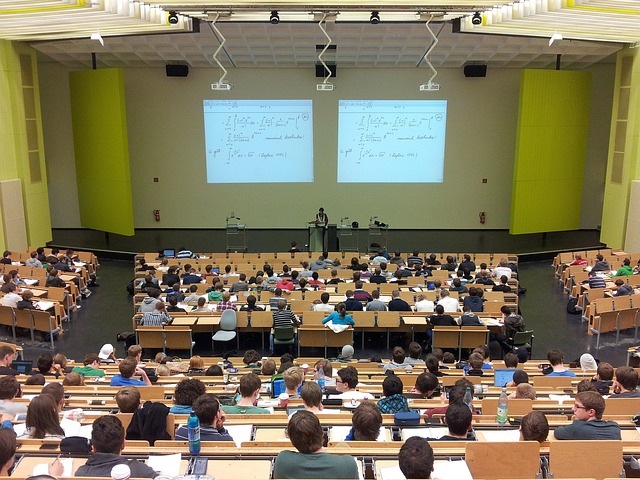
Participation of Center Experts in the Regional Forum on Sustainable Development for the UNECE Region

The United Nations Economic Commission for Europe (UNECE) Regional Forum, held on March 13 and 14, 2024, served as a significant platform for showcasing Russian expertise in the area of sustainable development. This year’s Regional Forum took place amidst numerous challenges. In line with the commitment to the 2030 Agenda and its Sustainable Development Goals…

Assessment of the Quality of Education: Expert Advice, Part 2

Do Not Exaggerate the Importance of the Student Portfolio In recent years, there has been much discussion about the student portfolio as a means of objectively recording academic and extra-curricular achievements. Even today, individual student accomplishments serve as an alternative to standardized exams for admission to higher education, such as when entering universities based on…

GEM Report. New 2024 SDG 4 Scorecard – and an Africa edition

This second edition of the SDG 4 Scorecard produced together with the UNESCO Institute for Statistics (UIS) shows the efforts that countries have been making towards achieving their 2025 and 2030 national benchmarks. It was launched at the UNESCO Conference of Education Data and Statistics, which brought together education statisticians from over 125 countries and…

CICED participation in UN ECOSOC Forum 2024

The ECOSOC Partnership Forum held on January 30, 2024, is an annual major event and a well-established platform for discussing the progress and obstacles in achieving the Sustainable Development Goals and implementing the 2030 Agenda for Sustainable Development. Each year, experts from the CICED present developments in assessing the quality of education and international cooperation…

The participation of the Center’s experts at the UN Economic and Social Council (ECOSOC)

The ECOSOC Partner Forum, which took place on January 30th, 2024, is an annual major event and an established platform for discussing the progress and challenges in achieving the Sustainable Development Goals (SDGs) and implementing the 2030 Agenda for Sustainable Development. Experts from the Center annually present the Russian experience in education quality assessment and…
Formative Assessment: what it represents

Formative assessment refers to a set of practices, techniques, and activities employed to evaluate learning in progress. Through formative assessment, teachers or instructors receive feedback from students to understand their perception of the material and, consequently, adjust the curriculum and differentiate instruction to make it more personalized. Formative assessment assists students in developing valuable skills,…
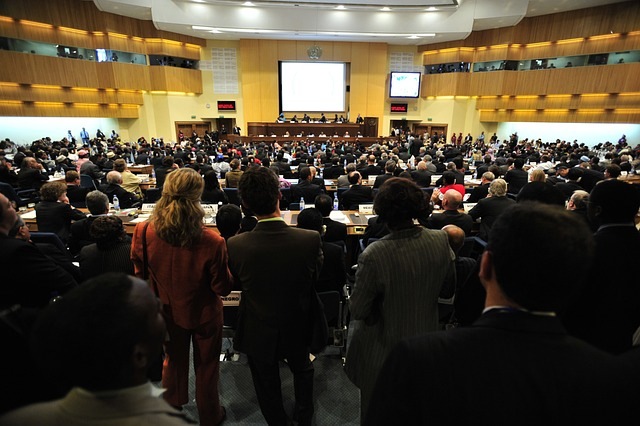
CICED’s work for the United Nations

Since February 2024, CICED experts have regularly continued participating in the work of the UN NGO Major Group to achieve the Sustainable Development Goals by 2023. The group seeks ways to enhance participation and intensify the involvement of non-governmental organizations in processes directly or indirectly related to the UN High-Level Political Forum (HLPF). Annually, the…

The Center’s Work in UN Advisory Bodies

Since February 2024, experts from CIAM have continued to regularly participate in the work of the main group of UN non-governmental organizations (NGOs) in the effort to achieve the Sustainable Development Goals (SDGs) by 2030. The group aims to strengthen the engagement and involvement of NGOs in processes related to the High-Level Political Forum (HLPF),…

Opinion: Mikhail Kushnir, League of Education: marking assessment, or is it possible to evaluate in a less labor-intensive and more informative way?

Despite the widespread popularity of criteria-based assessment methods, there are some who are disappointed with them. The complexity involved in understanding the principles, evaluating, and interpreting makes it no less formal than traditional non-criterion-based methods. This means that, despite the significant increase in labor costs, it is equally ineffective. As an expert in HR technology,…

Boris Elkonin’s Colleagues and Experts discussed his Legacy

On November 14th, 2023, Boris Daniilovich Elkonin, a prominent  figure in Russian psychology and developmental pedagogy, passed away. In honor of this notable scholar and practitioner, we held a roundtable discussion on his legacy.  Oksana Ostroverkh, a colleague of Boris Daniilovich in the Draft Project at the Krasnoyarsk Gymnasium “Univers”, shared her memories on how Elkonin’s ideas have influenced primary education. She highlighted the concept of separating the learning space into a “Draft” (a space for children’s testing) and a “Clean” (a space for effective learning). Boris Daniilovich considered “trial” and error work…

Potemkin Villages for Assessing the Quality of Education

By2022, two-thirds of Russian universities had adopted documents on implementating an internal education quality assessment System (IEQAS). However, the quality and applicability of these local regulations remain at a low level. Researchers Nadezhda Knyaginina and Yevgeny Puchkov analyzed documents on the IEQAS from 361 universities and presented the results of their work at a seminar…

Happy New Year!

Dear friends! The Center for International Cooperation in Education Development wholeheartedly congratulates you on the upcoming 2024 and wishes you and your loved ones confidence in tomorrow, happiness and a peaceful sky above your head!

Five takeaways from the international PISA exam results

The Programme for International Student Assessment (PISA) is issued every three years in more than 80 countries, examining how 15-year-old students perform in reading, mathematics, and science. Developed by the Organisation for Economic Co-operation and Development, or OECD, it launched in 2000 and offers comparative data that countries can use to influence education policy. Jonathan…